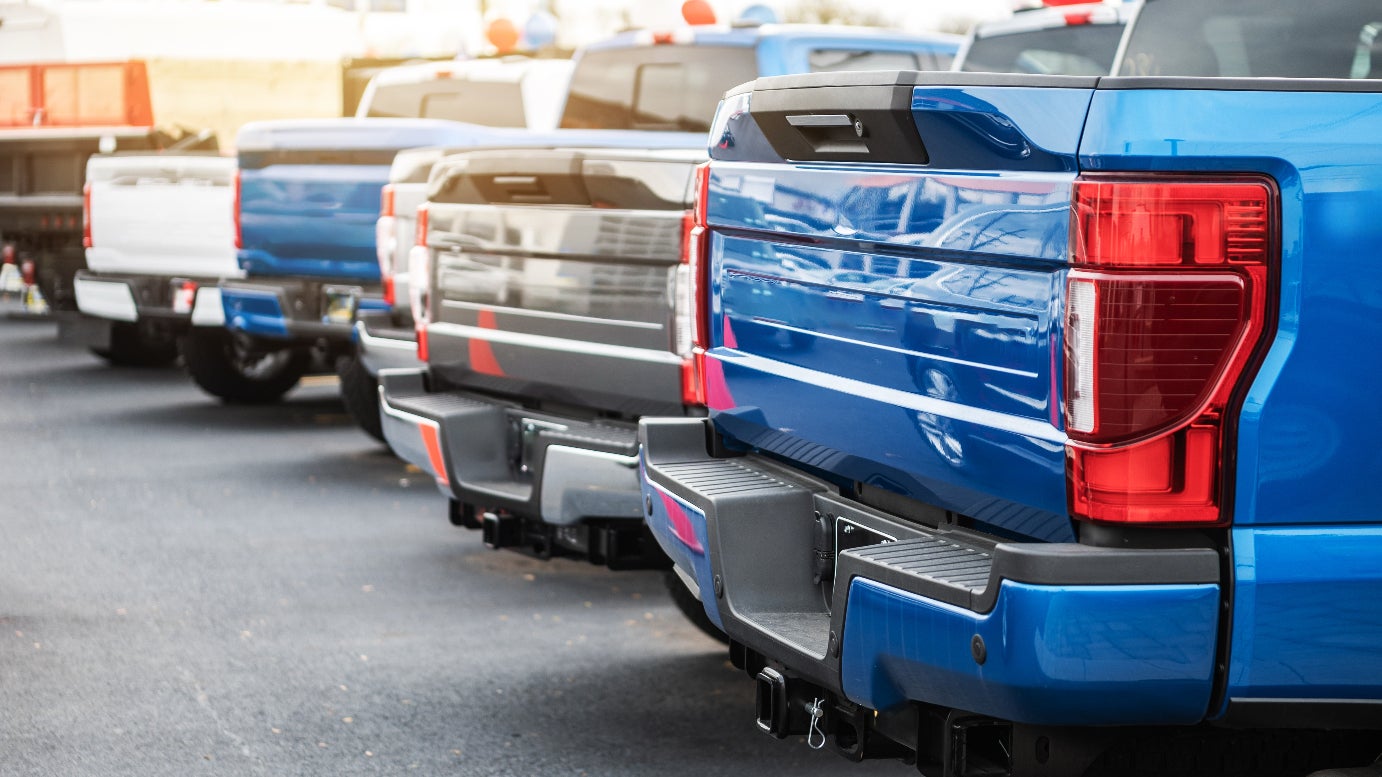
Used Trucks For Sale in Deming What to Look For When Evaluating a Used Truck Buying a used truck takes more than just kicking the tires and checking the odometer. Trucks endure heavy workloads that passenger cars rarely face, including heavy payload hauling, severe trailer pulling, and extended stationary idling at job sites. To ensure long-term mechanical health, every pre-owned truck buyer should examine ten crucial inspection points before committing to a purchase: 1 Engine idle hours compared to total mileage 2 Oil condition and under-cap fluid residue 3 Exhaust smoke color on cold start and acceleration 4 Transmission shift quality and torque converter lockup 5 Structural frame integrity and underbody corrosion 6 Rear axle differential and leaf spring deflection 7 Trailer brake controller wear and hitch stress 8 Critical wear components approaching 100,000 miles 9 Gas versus diesel maintenance and emissions requirements 10 Documented service invoices and open manufacturer recall history To assist local truck owners across Southwestern New Mexico, our certified service department in Deming, NM at Sisbarro Deming CDJR provides professional multi-point inspections and comprehensive pre-owned evaluations. Understanding Engine Hours vs. Mileage One hour of engine idling inflicts wear equivalent to roughly 25 to 30 miles of highway driving, so it's important to evaluate a vehicle's wear based on engine hours in addition to its actual time spent on the road. Modern trucks log both total mileage and engine operating hours within their digital trip meters, and dividing total odometer miles by total engine hours gives the vehicle’s average operating speed. An average below 25 mph signals heavy city driving or extensive idle time, whereas an average between 30 and 45 mph indicates healthy highway utilization. An average full-size pickup accumulates 12,000 to 15,000 miles per year under standard operation, with a seven-year-old pickup with 90,000 to 105,000 miles fitting expected national usage averages. However, mileage figures must always be interpreted alongside engine hour counters: Low mileage with high engine hours: Indicates commercial idling, utility fleet work, or prolonged PTO (power take-off) operation. An odometer showing 60,000 miles with 4,000 engine hours has an average speed of just 15 mph, indicating engine wear comparable to a truck with over 100,000 driving miles. High mileage with low engine hours: Represents clean highway transit. A truck displaying 120,000 miles across 2,800 engine hours reflects an average speed of over 42 mph, meaning oil temperatures stayed hot enough to burn off moisture and engine components suffered minimal stop-and-start fatigue. What Mechanical Signs Indicate a Healthy Engine and Transmission During an Inspection? A healthy truck engine starts effortlessly from a cold ignition, idles silently without valve ticking or bottom-end knocking, displays clear oil under the filler cap, and delivers firm, immediate gear engagement through its transmission. Detecting engine or transmission defects during a pre-purchase review prevents taking on hidden powertrain failures. Examining oil condition provides an immediate window into internal engine health, making removing the oil filler cap and inspecting its underside a mandatory check: Milky oil under the cap: Indicates coolant mixing with engine oil, forming a yellowish, frothy emulsion. This froth is a classic indicator of a blown head gasket, a cracked cylinder head, or a damaged engine block. While minor condensation can occasionally form under the cap on vehicles driven short distances in cold weather, deep emulsion on the dipstick confirms severe internal coolant leakage. Blue exhaust smoke: Signals that burning engine oil is entering the combustion chambers, typically caused by worn piston rings, degraded valve stem seals, or a failing turbocharger seal. Black exhaust smoke: Demonstrates an excessively rich fuel mixture, caused by stuck-open fuel injectors, clogged air filters, or failing mass air flow sensors. White exhaust smoke: Persistent sweet-smelling white smoke during operation confirms coolant burning inside the cylinder combustion chambers. To check for transmission slipping, accelerate moderately up an incline while maintaining steady throttle pressure. If the engine RPM spikes suddenly without a corresponding increase in vehicle speed, the transmission clutches or torque converter friction plates are slipping. Furthermore, delayed gear engagement when shifting from Park into Drive or Reverse, harsh shuddering under load, or hesitation during downshifts indicates low fluid pressure, valve body wear, or severe fluid degradation. Inspecting the Frame, Rust, and Suspension Evaluating a used truck requires inspecting the structural frame rails, suspension attachment points, and rear axle housing for flaking corrosion, cracking, alignment shifts, and differential fluid leaks. Frame damage and structural rust compromise safety and dramatically reduce a truck's resale value, turning surface blemishes into structural hazards over time. Light surface rust on a steel truck frame is normal and rarely impacts structural integrity or resale value if addressed early with protective coatings. However, heavy flaking scale, soft spots that yield to pressure, structural rust holes, or fresh undercoating sprayed over uncleaned corrosion signal severe metal degradation. Frame repair welds, misaligned cab-to-bed gaps, or non-factory torch marks point directly to prior collision damage or frame-straightening procedures. When assessing whether a pre-owned truck carried continuous heavy payloads, inspect the rear axle, leaf springs, and differential assembly for specific wear patterns: Leaf spring arch and plastic isolators: Flat or downward-curved leaf springs indicate prolonged payload strain beyond gross vehicle weight ratings (GVWR). Worn or missing plastic anti-friction pads between spring leaves cause metal-on-metal grinding. Rear axle differential weep and gear whine: Persistent oil dampness around the differential cover gasket or pinion seal indicates heat buildup and worn seals. During a test drive, a high-pitched whining noise from the rear axle during acceleration signals worn pinion bearings or uneven ring-and-pinion gear wear caused by heavy hauling. Shock absorber weeping and bump stop damage: Crushed, split, or missing rubber axle bump stops confirm that the suspension frequently bottomed out under extreme weight. Trucks driven through heavy brush or off-road trails require drivetrain protection checks. Inspecting those underbody skid plates, steering linkage boots, and sway bar end links reveals whether the vehicle endured reasonable trail use or severe underbody impacts. Where is the Trailer Brake Controller Located and What Does Towing Wear Reveal? An integrated trailer brake controller is located on the lower dashboard instrument panel to the right or left of the steering column, featuring a manual slide switch and gain adjustment buttons. Heavy wear on the controller buttons, scratched trailer hitch receiver tubes, and aftermarket wiring taps signal that a truck spent a substantial portion of its operating life pulling heavy recreational or commercial trailers. Examining towing hardware provides direct insight into how hard the vehicle worked, as inspecting the receiver hitch pin hole for ovaling or metal elongation can reveal repeated heavy tongue-weight pulling. Additionally, inspect the seven-pin electrical trailer harness connector for corroded pins, melted plastic, or spliced wiring, as heavy-duty towing subjects the cooling system, transmission, and rear braking components to sustained high temperatures. Vehicle Parameter Used Gas Truck Used Diesel Truck Primary Towing Duty Light to moderate towing (under 10,000 lbs) Heavy towing ( 10,000 lbs to 20,000+ lbs) Upfront Service Cost Lower routine maintenance expenses Higher fluid capacities and filter costs Emissions Hardware Standard catalytic converters and oxygen sensors DEF systems, DPF filters, and EGR coolers Ideal Driving Pattern Daily commuting, short trips, mixed driving Long-distance highway hauling under load After passing 100,000 miles, specific truck components reach the end of their operational lifecycle regardless of whether the powertrain is gas or diesel. Components that typically require replacement after passing the 100,000-mile mark include: Front suspension ball joints, tie rod ends, and sway bar links Water pumps, thermostat assemblies, and serpentine belt tensioners Universal joints (U-joints) along the main driveshaft assembly Brake rotors, calipers, and rubber brake flex lines Shock absorbers and strut cartridges Transmission fluid, transfer case fluid, and differential gear oils Why Professional Maintenance Records and Multi-Point Inspections Matter for Pre-Owned Pickups Documented maintenance records verify that vital fluid services, filter changes, and recall repairs were performed at required factory intervals, eliminating guesswork about a truck's service history. According to automotive safety guidelines published by Kelley Blue Book and Edmunds, reviewing detailed service invoices helps buyers identify deferred maintenance, repeated component failures, or unaddressed factory service bulletins before completing a purchase. Don't only rely on a vehicle's history report, because non-reported services or self-performed oil changes don't always appear on automated databases. Reviewing physical service receipts confirms whether synthetic oil was used, how frequently differential fluids were replaced, and if automatic transmission flushes occurred on schedule. Additionally, running the truck's 17-character VIN through the National Highway Traffic Safety Administration recall database at NHTSA.gov/recalls verifies that all safety recalls were completed through an authorized dealer network. Frequently Asked Questions About Used Truck Inspections Q: Is a 150,000-mile used truck still worth buying? + A 150,000-mile used truck is well worth buying if it possesses a documented service history, clean frame structure, and healthy engine operating hours. Modern full-size pickups routinely run past 200,000 miles when routine maintenance is performed regularly, although it may be smart for buyers to reserve a modest budget for routine wear items like shock absorbers, suspension bushings, and water pumps. Q: What does milky residue under the oil cap mean? + Milky residue under an oil filler cap indicates that engine coolant is mixing with motor oil to create a frothy emulsion. This symptom typically points to internal engine component failures such as a blown head gasket, cracked cylinder head, or damaged engine block. If a dipstick also reveals milky oil, expensive internal engine repairs or engine replacement will be required. Q: How do you spot transmission slipping on a test drive? + To detect transmission slipping during a test drive, drive the truck up a steady hill at 45 to 60 mph and apply moderate accelerator pedal pressure. If engine RPM increases noticeably while vehicle speed remains constant, the transmission clutches are slipping. Delayed gear engagement when shifting from Park into Drive or harsh clunking between gear changes also signals internal transmission wear. Q: Does surface rust on a truck frame affect its resale value? + Light surface rust on a steel frame rail is normal and does not impact structural strength or resale value if cleaned and sealed promptly. However, deep flaking scale, soft spots, structural rust holes, or freshly applied rubberized undercoating designed to hide frame rot significantly lowers resale value and creates severe safety concerns. Explore Our Used Truck Inventory in Deming, NM If you're ready to find a dependable used truck, browse through our used vehicle inventory today! You can rest easy on the road thanks to the Sisbarro certified pre-owned program, providing our Lifetime Engine Protection warranty to all eligible vehicles. Additionally, before you visit, you can make use of our online 10-second trade value tool to see how much your current vehicle is worth, and let our Extra Effort Financing team build a payment plan tailored perfectly to your budget. If you have any other questions for us, contact us online at Sisbarro Deming Chrysler Dodge Jeep Ram or schedule a test drive today! Used Trucks For Sale in Deming Vehicle specification data © JATO Dynamics Limited.